ABOUT
I learned business from the finance side, then spent twenty years making it run.
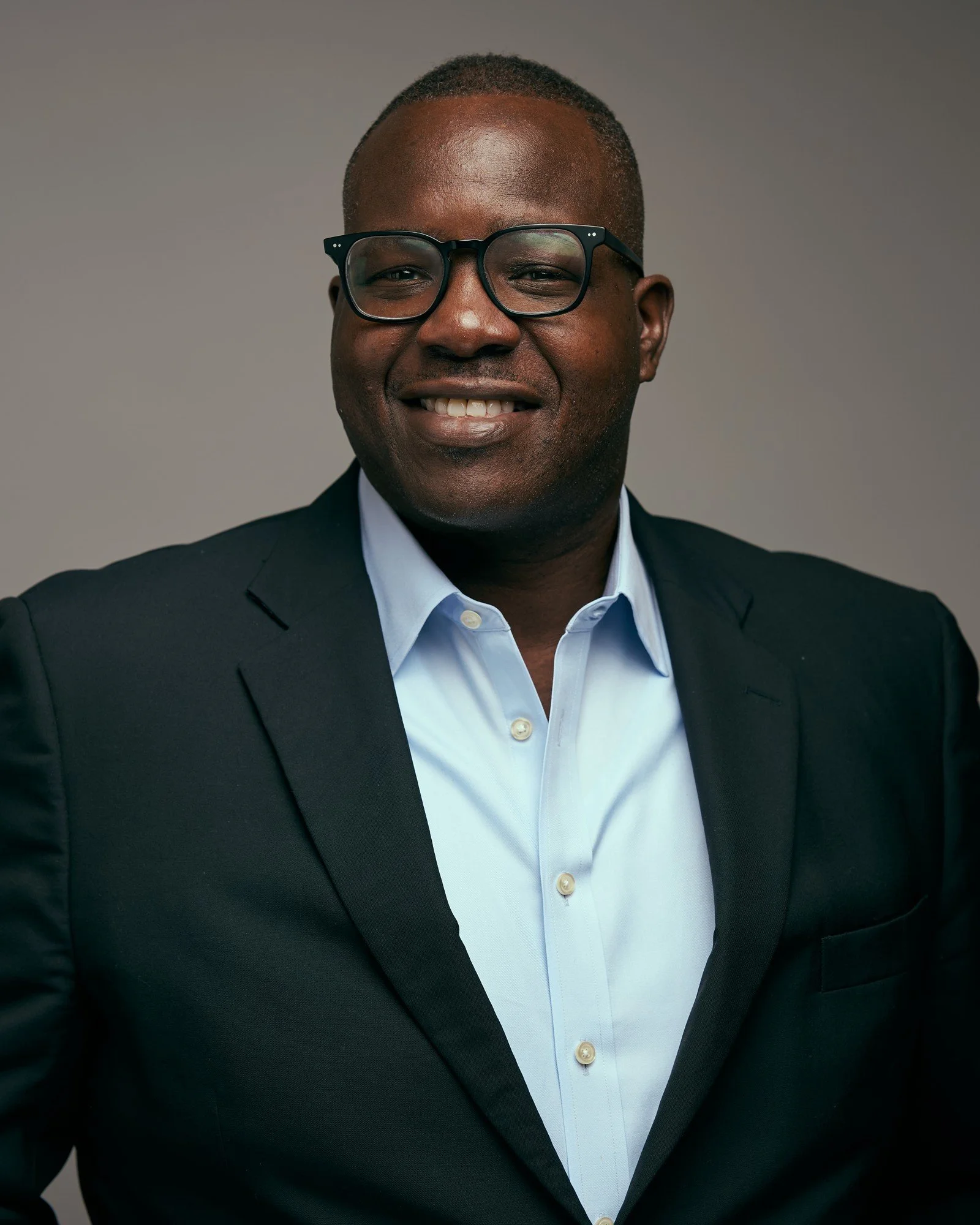
Operations executive, former American Express finance and transformation leader, and founder of Jarkara Strategies. Raised in Brooklyn, NY, based in the New York area, with a career that has covered markets across North America, Europe, India, and Asia Pacific.
THE PATH
An operator’s path, not a consultant’s
My name, Jaramogi, means "one who travels often" in Kiswahili, and I have spent my career deliberately trying to live up to it. I majored in Comparative Area Studies at Duke and minored in Japanese because I wanted an international business career, ideally in Asia. Duke is also where I had my first real leadership seat, as vice president and then president of my Alpha Phi Alpha chapter.
After strategy consulting at Mitchell Madison Group and Red Sky, I joined American Express in finance and was selected as one of ten for the Finance Global Job Rotation Program. I put New Delhi first, the program's only post in Asia, and got it. London followed. From there I moved into business transformation, first for North America, then for six Asia Pacific markets from Sydney, with a stint in Singapore when the GM asked to borrow me as her de facto chief of staff. The pattern held throughout: I was sent where the problems were. My last role there was Chief of Staff to the Enterprise Platforms CIO.
That sequence taught me something many operators learn late: operating problems show up in the numbers first, and most financial problems turn out to be operating problems. The finance training is why I can take a P&L apart myself. The transformation and Chief of Staff years are why I can put an organization back together.
Stanford GSB was just as deliberate. I went to make the move from organizations of thousands to startups, where the finance, transformation, and Chief of Staff work I had done at Amex could come together in a single operator role. Since then I have worked in strategy and operations at Twitter while the function and its mandate were first being defined, been Head of Finance and People at Bindle Systems, served as COO at DIVERSD, and been Chief of Staff to the President at Vibrant Emotional Health. In 2021 I founded Jarkara Strategies to bring that enterprise discipline to CEOs who need senior operating leadership, but not yet full time.
WHERE I HAVE WORKED New York · London · New Delhi · Singapore · Sydney, with regional remits across Asia Pacific and North America
HOW I WORK
Three habits that show up in every engagement
Start with the numbers. I build the view myself, from raw data if I have to, before recommending anything. A blended report can hide the one thing that is actually wrong.
Work through the leaders. I report to the CEO and run the work through the leadership team. The chain of command stays clear, and the people who will own the result build it with me.
Build it to hand off. An engagement succeeds when the system runs without me. The hiring platform I set up at one startup is still in use years later, after a $40M Series B.
EDUCATION
Stanford Graduate School of Business · M.S. in Management
Duke University · A.B. in Comparative Area Studies (East Asia) and African-American Studies, minor in Japanese
Harvard Executive Leadership Certificate · Six Sigma Green Belt · SAFe Product Owner / Product Manager
BOARD SERVICE
Hope Loves Company · Board Treasurer and Chair of the Finance Committee, 2024 to present
Indego Africa · Board Member, 2023 to 2025
AFFILIATIONS
Alpha Phi Alpha Fraternity, Inc. · Chapter Vice President, then President, at Duke University
MENTORING
Rutgers Business School · Mentor, Exit & Win Accelerator
Mentor with Polygence, Year Up, My Brother's Keeper, and A Better Chance
BEYOND THE ENGAGEMENTS
Hand-Me-Down World
A lot of what makes people effective at work is never formally taught. It gets handed down, if you are lucky enough to be near someone willing to hand it down. Hand-Me-Down World is my writing on those lessons, drawn from two decades of learning them firsthand.
READ THE SERIES
Bring me the operating problem.
The first conversation is about the problem, not the proposal.